
Kathleen A. Paris, Ph.D., Author of Gentle Comforts
Kathleen A. Paris, Ph.D., Author of Gentle Comforts

Gentle Comforts:
For Women Grieving the Loss of a Beloved Life Companion
Available Now!
Order from ACTA Publications
Call 800-397-2282 or order online
https://actapublications.com/gentle-comforts/
Also available on Amazon


About the Author
Kathleen A. Paris, Ph.D., shares her own grief journey following the death of her husband in 2018 in Gentle Comforts: For Women Grieving the Loss of a Beloved Life Companion.
As an author, educator, and management consultant, Paris has assisted organizations over the past thirty years to plan for new realities and improve their systems and organizational climate. She currently holds the title of Distinguished Consultant Emeritus from the University of Wisconsin-Madison.
Paris has consulted in the United States and internationally in Canada, Cyprus, France, Guam, Switzerland, Virgin Islands, and the UK. She
is an editor and one of the co-authors of Bending Granite—30+ True Stories of Leading Change (ACTA, 2022).Among many other books and articles, Paris has written Staying Healthy in Sick Organizations: The Clover Practice™ and Bringing Your Strategic Plan to Life.
She holds a Ph.D. in Educational Administration from UW-Madison.
Paris lives in Madison, Wisconsin and shares five treasured children with her late husband, Matt Cullen, and 13 grandchildren.
Add paragraph text here.
Photo Credit: Mary Bergin
Events

Thursday, April 25, 2024, 8-9 a.m.
WNDZ 750AM Radio Chicago (audio)
Gentle Comforts Interview with
Fr. Greg Sakowicz & Mark Teresi
https://youtu.be/5Zm1Q7_on10 (YouTube video)

Thursday, May 23, 2024
6:30 p.m.
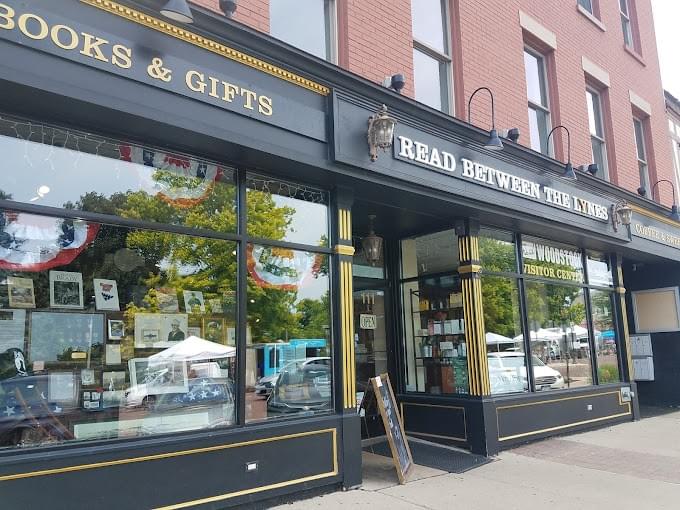
Read Between the Lines
111 E. Van Buren St.
Woodstock, Illinois
Gentle Comforts Book Talk & Conversation around Grief
Reservation requested https://www.readbetweenthelynes.com/
Add paragraph text here.

Saturday, July 20, 2024,
10:00 a.m.-1:00 p.m.
Gentle Comforts Book Signing
Novel Bay Booksellers
44 N 3rd Ave
Sturgeon Bay, WI 54235
https://www.novelbaybooks.com/

Monday, August 26, 2024 1:00 p.m.
MadisonBookBeat,
WORT Radio 89.9 FM
Gentle Comforts Interview with Lisa Malawski
PAST EVENTS

Wednesday, April 17, 2024
6:00 p.m.
Mystery to Me Books
1863 Monroe St., Madison, WI
Gentle Comforts Book Talk & Conversation around Grief
with Mare Chapman, Psychotherapist, Teacher, Author
BOOKS BY THE AUTHOR
Add details and descriptions to each product.